

You search “how to learn digital marketing” and suddenly find 20 different skills: SEO, Google Ads, social media, email marketing, analytics, content marketing, and more. Then comes the real question: Where are you actually supposed to start?
If you’re a beginner, you don’t need to master every digital marketing channel at once. My recommendation is simple: start with marketing fundamentals, learn SEO and content, understand analytics, and then move into paid advertising and advanced strategies.
This digital marketing roadmap will show you what to learn, what to practice, and how to gradually build skills that you can use in real projects.
What Is Digital Marketing?
Digital marketing is the process of promoting a business, product, or service through online channels such as search engines, websites, social media, email, and paid advertising.
Real-World Example:
Think about a local gym. It could use SEO to appear when someone searches for a gym nearby, Instagram to share workout content, Google Ads to reach people actively looking for a gym, and Analytics to understand which channels are generating enquiries.
That’s digital marketing in action. Different channels work together to achieve a business goal.
Before You Start: Don’t Try to Learn Everything
One common mistake beginners make is trying to learn everything simultaneously. They start SEO today, Google Ads tomorrow, then jump to email marketing and five different AI tools.
Instead, build your knowledge step by step.
Recommended Learning Pathway

You don’t need 15 tools or five certificates before starting your first project. Learn the concepts first, then use tools to apply them.
Step-by-Step Learning Guide
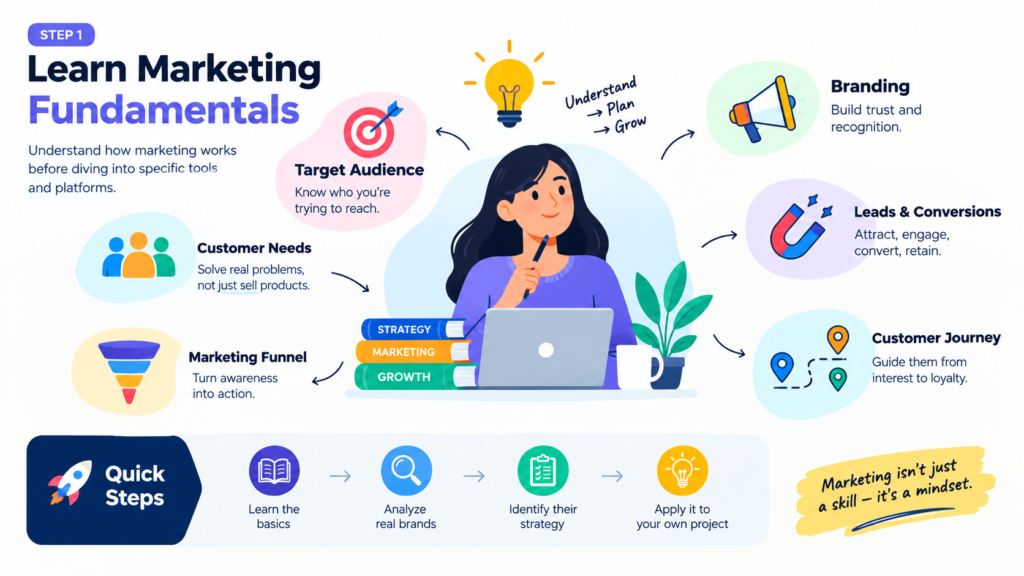
Step 1: Learn Marketing Fundamentals
Before learning specific platforms, understand how marketing works. Learn about target audiences, customer needs, marketing funnels, branding, leads, conversions, and customer journeys.
- Example: If you’re marketing a skincare brand for young adults, you first need to understand who the audience is, what problems they have, what type of content they consume, and what might convince them to purchase.
- 🎯 Do This: Choose a brand you know and identify its target audience, marketing channels, main offer, and customer journey.
- ⚠️ Beginner Mistake: Focusing on platforms before understanding the customer.
Step 2: Learn SEO and Keyword Research
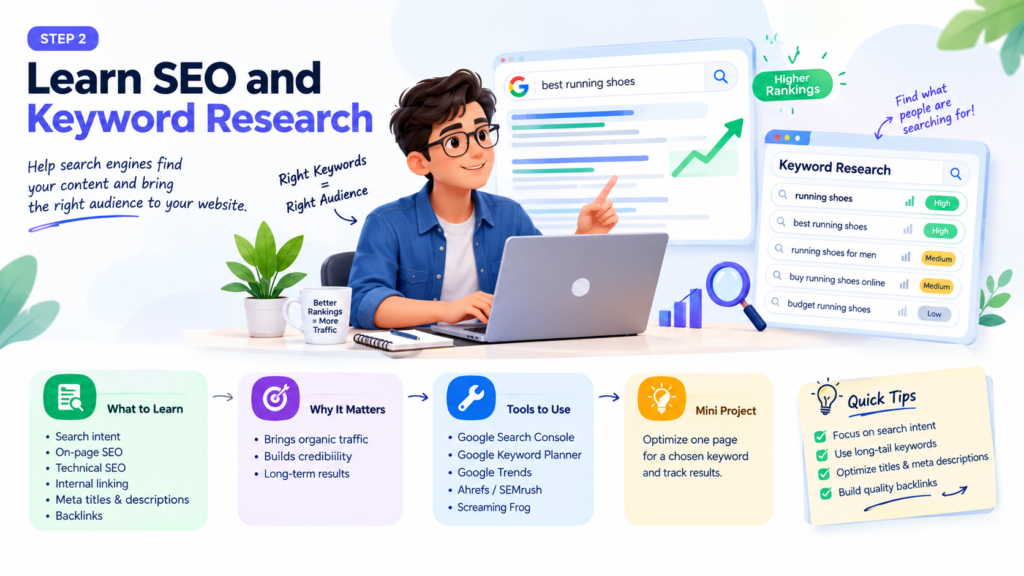
SEO (Search Engine Optimization) helps websites attract organic traffic from search engines. It is one of the first skills I recommend learning because it teaches you how people search for information and how websites can satisfy that search intent.
Start with keyword research, search intent, on-page SEO, technical SEO basics, internal linking, meta titles, meta descriptions, and backlinks. You don’t need expensive tools to start—Google Search Console and Google Keyword Planner are useful free platforms.
🛠️ Your First SEO Project Checklist:
- Choose a small niche.
- Find 20 relevant keywords.
- Group them by search intent.
- Create or optimize one article.
- Submit the page to Google Search Console.
- Track impressions and clicks.
- ⚠️ Beginner Mistake: Learning SEO tools without actually optimizing a page.
Step 3: Learn Content Marketing
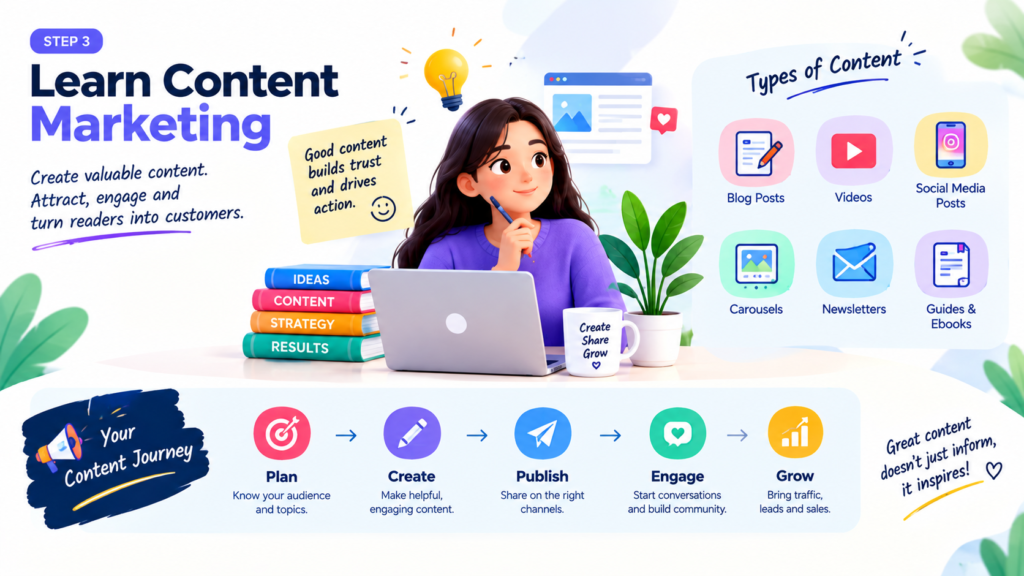
SEO can bring people to your website, but useful content gives them a reason to stay. Content can include blog posts, videos, reels, social media posts, carousels, newsletters, and guides.
- Example: If your audience consists of digital marketing beginners, instead of writing a generic article about SEO, create targeted content such as “5 SEO Mistakes Beginners Should Avoid.”
- 🎯 Do This: Choose one topic and create one blog post, three social media posts, and one short video around it.
- ⚠️ Beginner Mistake: Creating content without knowing who you’re creating it for.
Step 4: Learn Social Media Marketing
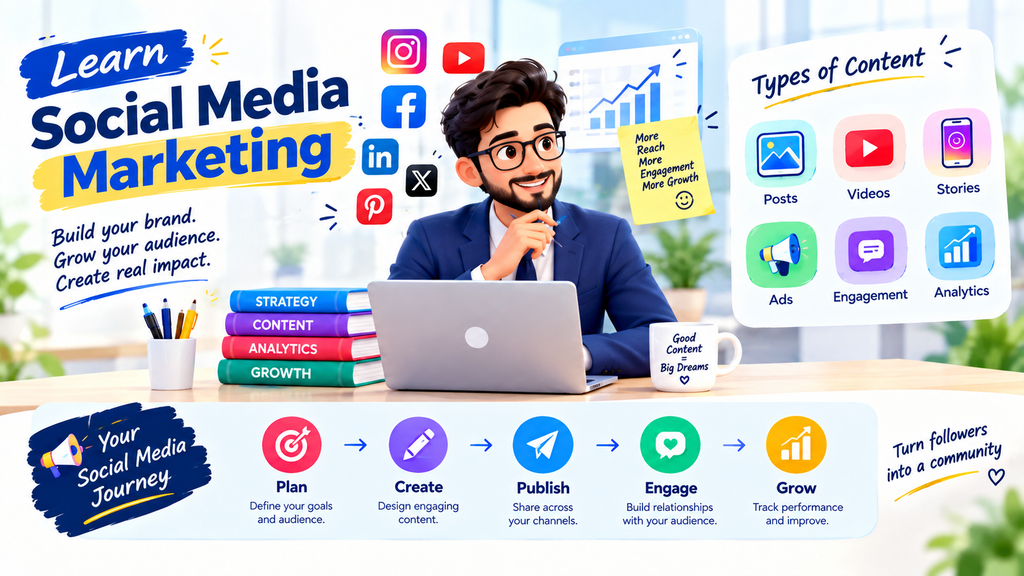
Social media marketing helps businesses build awareness, communicate with customers, and create communities. Start with platforms such as Instagram, Facebook, LinkedIn, Pinterest, or YouTube based on your target audience.
Focus on content planning, content calendars, audience research, engagement, community management, and social media analytics.
- 🎯 Do This: Choose one brand and create a 7-day content calendar with different content formats.
- 💡 Pro Tip: Don’t just post. After publishing, check which posts receive better reach, engagement, saves, shares, or clicks.
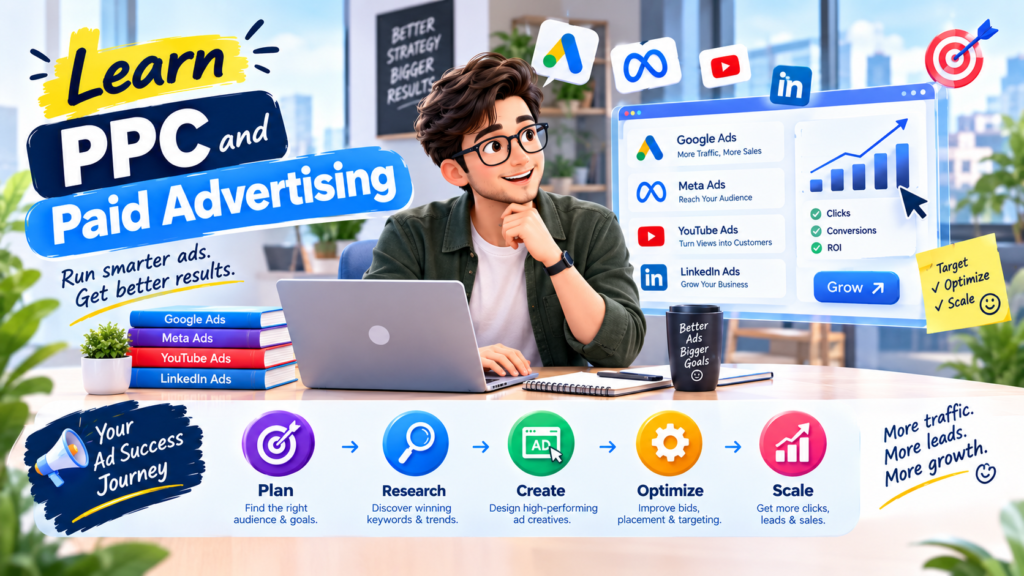
Step 5: Learn PPC and Paid Advertising
Once you understand organic marketing, start learning PPC (Pay-Per-Click) advertising. Free platforms like Google Skillshop provide training for Google Ads and Analytics. You can also practice Meta advertising through Meta Ads Manager without spending a massive budget.
Master campaign objectives, audience targeting, keywords, ad copy, creatives, budgets, bidding, conversions, and retargeting.
- 🎯 Do This: Create a mock Google Ads or Meta Ads campaign for a fictional business. Define the audience, objective, budget, ad copy, creative idea, and expected conversion.
- ⚠️ Important: Don’t start spending real money before understanding conversion tracking and campaign objectives.
Step 6: Learn Analytics
A marketer should not only create campaigns but also understand their results. Master Google Analytics 4 (GA4) and Google Search Console to track users, traffic sources, engagement, and conversions.
- Example: If a page receives 10,000 impressions but very few clicks, you might need to rewrite its title tag and meta description to improve click-through rate (CTR).
- 🎯 Do This: Analyze a website or your own project and create a simple report showing what is working, what isn’t, and what you would improve.

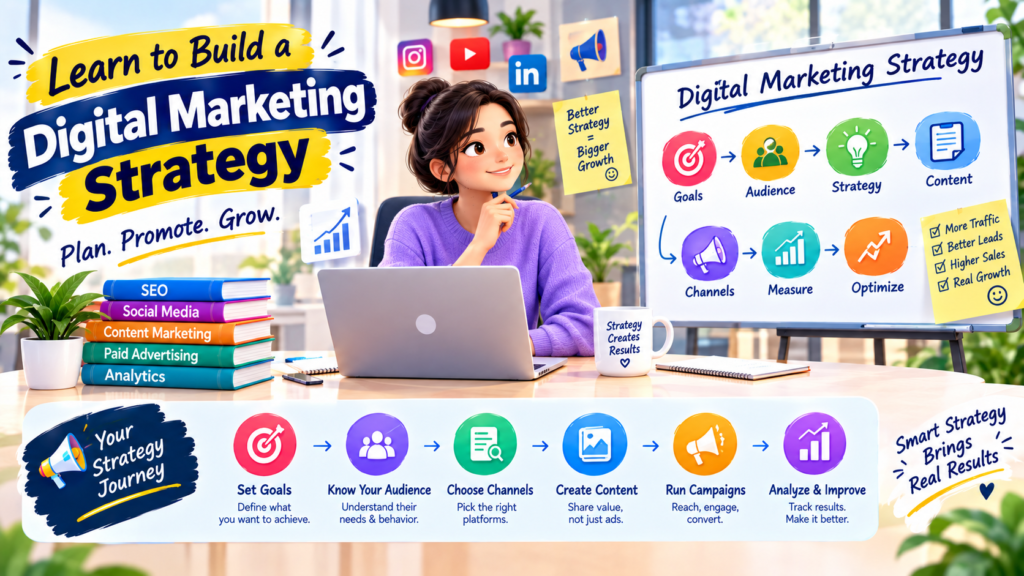
Step 7: Learn to Build a Digital Marketing Strategy
Now connect everything you’ve learned into an integrated plan.
🔄 The Strategy Framework:

5 Mistakes Digital Marketing Beginners Should Avoid
- Trying to learn every skill simultaneously.
- Collecting certificates without building real projects.
- Focusing on software tools instead of core marketing concepts.
- Running paid ads before setting up conversion tracking.
- Creating content without defining the target persona.
- 📅 90-Day Digital Marketing Roadmap
| Timeline | Skill Focus | Action Item | Expected Outcome |
| Days 1–15 | Marketing Fundamentals | Analyze 3 brands and their marketing funnels | Clear grasp of core marketing principles |
| Days 16–30 | SEO & Keyword Research | Research keywords and optimize 2 web pages | First completed SEO project |
| Days 31–45 | Content & Social Media | Create 10 content pieces & a content calendar | Basic content creation portfolio |
| Days 46–60 | Google & Meta Ads | Design mock advertising campaigns | Solid understanding of PPC basics |
| Days 61–75 | Web Analytics | Analyze performance data via GA4 & Search Console | Practical reporting and insights skills |
| Days 76–90 | Integrated Strategy | Complete one end-to-end strategy project | Complete case study for your portfolio |
If I Were Starting Digital Marketing Today…
I wouldn’t begin by buying five expensive courses or trying to master every platform at once.
I’d spend the first month understanding marketing fundamentals and SEO. Then I’d create a small website or blog to use as my testing ground. After understanding organic traffic and content creation, I’d move into paid advertising and analytics.
My goal wouldn’t be to collect certificates—my goal would be to build proof that I can actually do the work.
Where Can You Learn Digital Marketing?
You can learn digital marketing through high-quality YouTube channels, blogs, courses, internships, and hands-on projects. Excellent free platforms to start with include:
- Google Skillshop (Google Ads & Analytics Certification)
- Google Search Console & Keyword Planner (SEO execution)
- HubSpot Academy (Inbound & Content Marketing)
💡 Remember: A certificate shows you completed a course, but a real project shows what you can actually deliver.
Final Thoughts
Your initial goal shouldn’t be calling yourself a “digital marketing expert.” Your goal should be completing one real project, analyzing what happened, and making it better.
Do that repeatedly, and your skills, confidence, and portfolio will naturally grow.

💬 Over to You!
Which step of this digital marketing roadmap are you working on right now? Drop a comment below and share your learning journey!

Leave a Reply