

When you search for something on Google, you probably notice that some websites appear on the first page while others are several pages behind. Have you ever wondered why?
One of the major factors behind this visibility is SEO Search Engine Optimization.
SEO is an essential part of digital marketing because it helps websites become more discoverable when people search for relevant information, products, or services. But SEO isn’t simply about putting keywords into an article. It involves understanding your audience, creating useful content, improving website structure, and making it easier for search engines to understand your pages.
In this beginner-friendly guide, you’ll learn what SEO is, how search engines work, what on-page and off-page SEO mean, what backlinks are, and practical ways to improve your Google ranking.
What Is SEO?
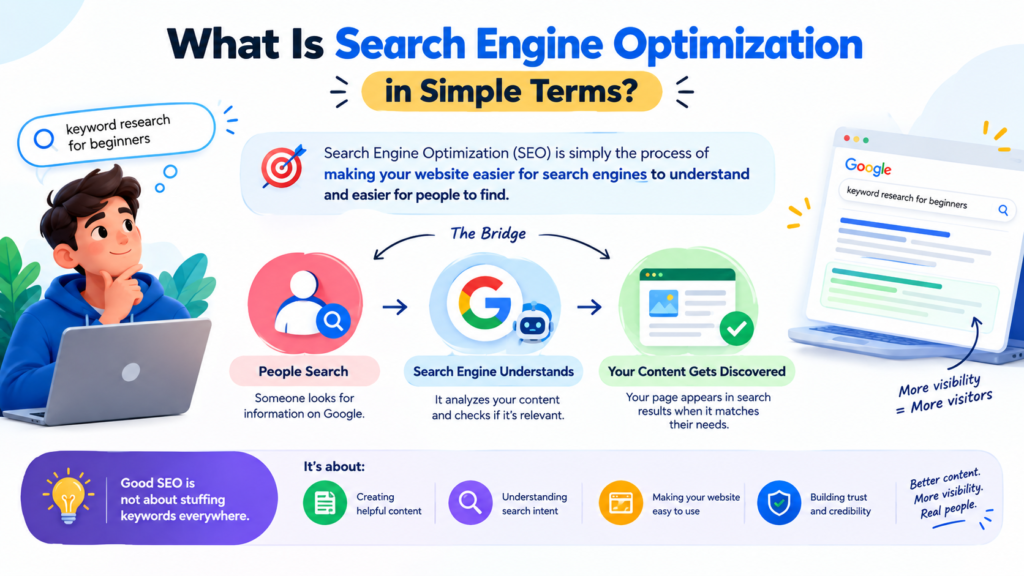
SEO stands for Search Engine Optimization. It refers to the process of improving webpages and websites so that search engines can better understand their content and users can discover them through relevant organic search results.
For example, suppose you have a digital marketing website and publish an article about keyword research. A beginner searches Google for “keyword research for beginners.”
If your page is relevant, useful, technically accessible, and provides a good answer to the user’s query, it may become eligible to appear in Google’s search results.
However, there is no guaranteed formula for reaching position one.
Good SEO focuses on the fundamentals: helpful content, search intent, website accessibility, relevant keywords, clear structure, and a trustworthy user experience.
What Is Search Engine Optimization in Simple Terms?
A simple way to understand SEO is:
Help search engines understand your content and help people find the information they’re looking for.
Think about the last time you searched for a problem online. You probably weren’t looking for a page stuffed with keywords. You wanted a clear and useful answer.
That is an important SEO lesson: search visibility starts with user needs.
How Does a Search Engine Work?
To understand SEO, you first need to understand how search engines discover and organize information.
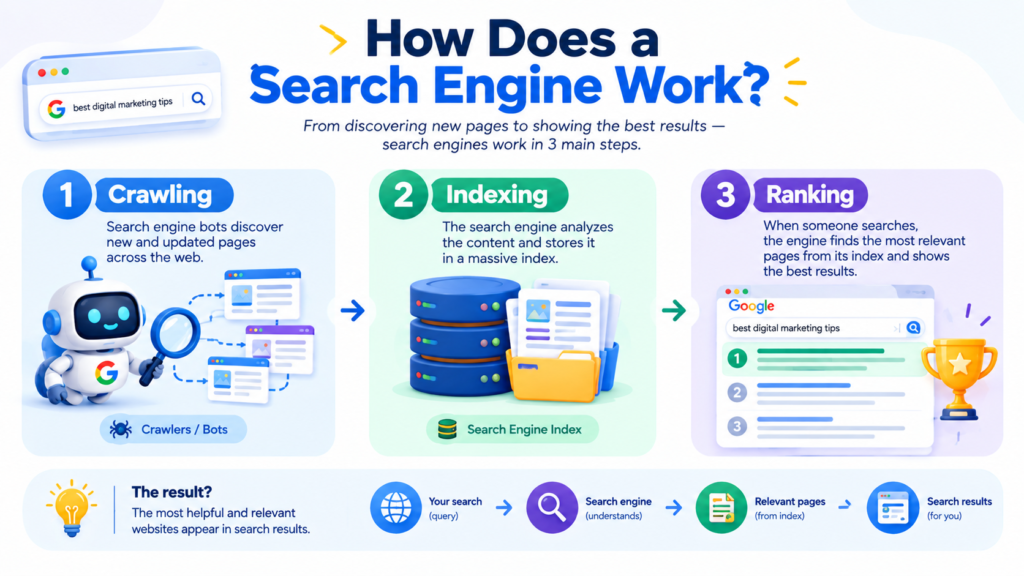
1. Crawling
Search engines use automated systems called crawlers or bots to discover webpages. They can follow links from one page to another and find new or updated content.
2. Indexing
After discovering a webpage, a search engine can analyze and store information about it in its index.
However, being crawled doesn’t automatically mean that a page will be indexed.
3. Ranking
When someone enters a search query, the search engine identifies relevant pages from its index and determines which results should be displayed.
This means publishing a blog post is only the beginning. Your content needs to genuinely satisfy the searcher’s purpose.
What Is SEO in Digital Marketing?
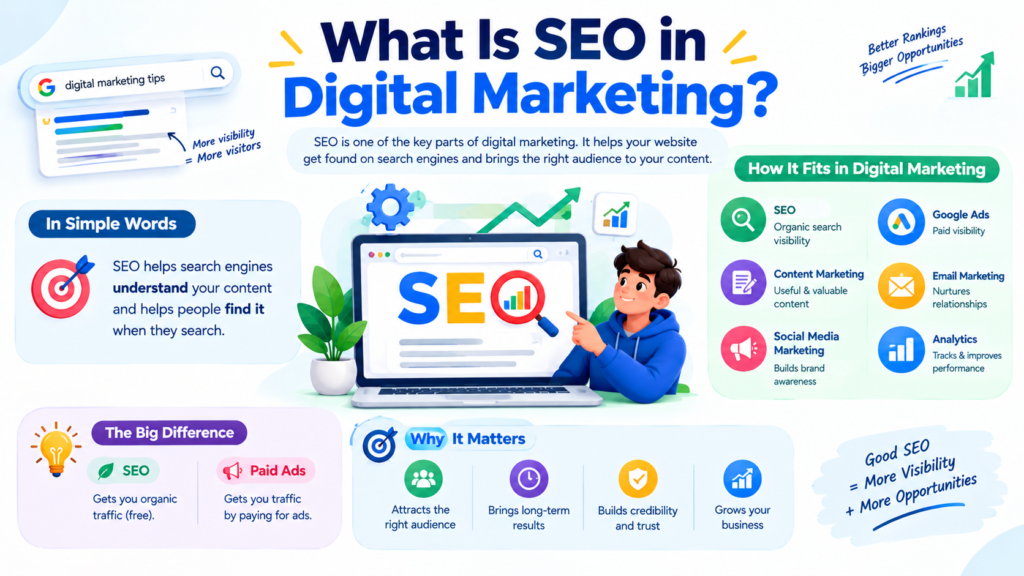
SEO is one component of a broader digital marketing strategy.
A business may use SEO alongside:
- Content marketing
- Google Ads
- Social media marketing
- Email marketing
- Conversion optimization
- Analytics
The major difference is that SEO focuses on organic search visibility, whereas paid search advertising involves paying for advertising placements.
For example, if you write a useful article targeting a specific question, that article may continue attracting relevant visitors over time. This is one reason SEO can be valuable for blogs, businesses, and personal websites.
What Is On-Page SEO?
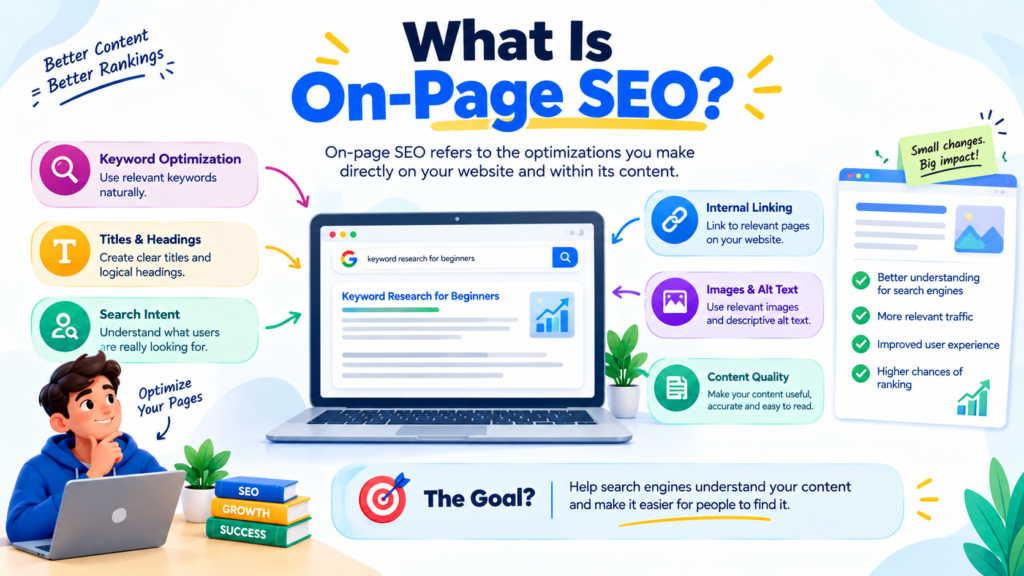
On-page SEO refers to improvements made directly to your webpage and its content.
Some important areas include:
Keyword Optimization
Research the terms your audience actually searches for and use relevant keywords naturally.
Don’t repeat a keyword in every sentence. Keyword stuffing can make content difficult to read and does not create a better experience.
Titles and Headings
Create a descriptive page title and organize your article with logical headings.
A reader should be able to understand the subject of your page quickly.
Search Intent
Search intent means understanding why someone is searching.
For example:
- “What is SEO?” → The user wants information.
- “SEO tools for beginners” → The user may be researching tools.
- “SEO services” → The user may be looking for professional services.
Understanding intent helps you create content that matches what your audience actually needs.
Internal Linking
Link relevant pages within your website. For example, your Digital Marketing Roadmap for Beginners article can link to this SEO guide, while future articles about keyword research and technical SEO can link back to this page.
This creates a connected content structure and helps readers discover related information.
Images and Alt Text
Relevant images, screenshots, diagrams, and examples can make complicated topics easier to understand. Descriptive alt text can also help communicate an image’s purpose to users who use screen readers.
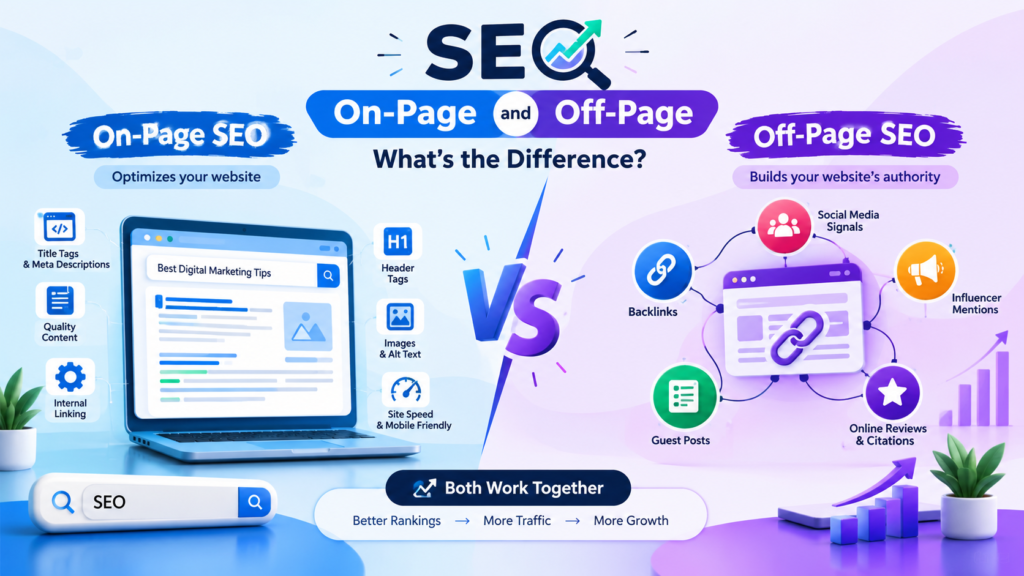
SEO On-Page and Off-Page: What’s the Difference?
The simplest distinction is:
On-page SEO: Things you optimize on your website.
Off-page SEO: Activities and signals that occur outside your website.
One commonly discussed part of off-page SEO is backlinks.
What Is a Backlink?
A backlink is a link from another website to your website.
For example, imagine you publish a detailed beginner’s guide to SEO. Another marketing website finds your guide useful and references it in one of its articles with a link.
That link is a backlink.
However, effective link building isn’t about collecting as many links as possible. Relevant, trustworthy references are generally more meaningful than random links from unrelated websites.
A practical approach is to create original resources, useful guides, research, examples, or genuinely valuable content that other websites have a reason to reference.
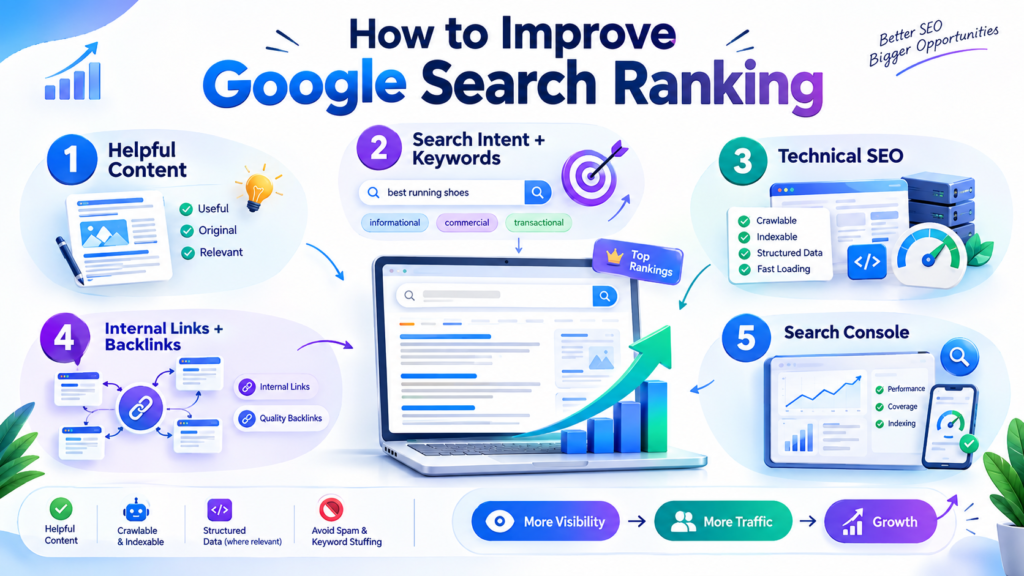
How to Improve Google Search Ranking
Nobody can honestly guarantee a specific Google ranking position. Search results depend on many factors and can change over time.
Instead of looking for shortcuts, build a strong SEO foundation.
1. Create Helpful Content
Answer real questions and solve real problems. Avoid writing only to reach a specific word count.
2. Match Search Intent
Before creating content, search your target topic and consider what information users are expecting.
3. Improve On-Page SEO
Use descriptive titles, logical headings, relevant keywords, internal links, and an easy-to-follow structure.
4. Take Care of Technical SEO
Make sure important pages can be discovered and accessed by search engines. Also pay attention to factors such as mobile usability, page experience, broken links, and website performance.
5. Demonstrate Experience and Expertise
Whenever possible, add practical examples, original insights, screenshots, case studies, or explanations based on real work.
For example, instead of simply saying “optimize your title,” explain how changing an unclear title to a more descriptive one can make the page easier for both users and search engines to understand.
6. Keep Important Content Updated
SEO doesn’t end when you click “Publish.”
Review important articles periodically. Update outdated statistics, examples, screenshots, links, and recommendations when the information changes.
What Is SEO Content?
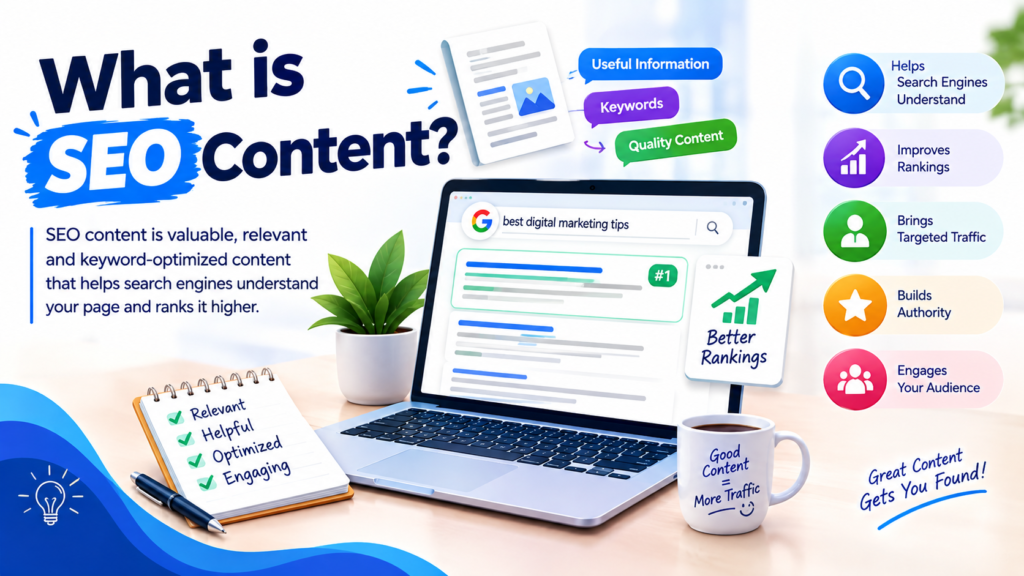
SEO content is content created to provide value to users while being understandable and discoverable by search engines.
Strong SEO content should be:
- Helpful
- Original
- Accurate
- Easy to read
- Well structured
- Relevant to the searcher’s intent
Don’t write an article simply because a keyword has search volume. Ask a more important question:
“Will this page actually help the person who searched for this topic?”
That mindset leads to better content.
Common SEO Mistakes Beginners Should Avoid
Some mistakes I frequently see beginners focus on include:
- Stuffing keywords into every paragraph
- Copying content from other websites
- Buying low-quality backlinks
- Writing only to increase word count
- Ignoring search intent
- Using misleading titles
- Publishing without internal links
- Ignoring technical SEO
- Expecting immediate ranking results
SEO is a process of testing, learning, measuring, and improving.
Frequently Asked Questions About SEO
How long does SEO take to show results?
There is no fixed timeline. Results can vary depending on competition, website history, content quality, technical issues, authority, and the search queries being targeted. Some pages may gain visibility relatively quickly, while competitive topics can require considerably more time and consistent effort.
Is SEO free?
Organic search traffic doesn’t require paying Google for every click, but SEO isn’t completely cost-free. It requires time and resources for research, content creation, technical improvements, monitoring, and ongoing optimization.
Can I do SEO myself?
Yes. Beginners can learn many SEO fundamentals themselves, including keyword research, on-page optimization, internal linking, content planning, and basic technical checks. More complex websites may benefit from professional SEO expertise.
What is the difference between SEO and SEM?
SEO generally focuses on improving organic search visibility. Search Engine Marketing (SEM) is a broader term that is often used in the context of search marketing, including paid search advertising. Terminology can vary between marketers and platforms.
What is cloaking in SEO?
Cloaking is a technique where different content or information is presented to search engines and users. It is considered a deceptive SEO practice when used to manipulate search rankings and can violate search engine guidelines.
Final Thoughts
SEO can look complicated when you first encounter terms such as crawling, indexing, backlinks, on-page SEO, off-page SEO, and search intent.
But the foundation is simple:
Create useful content, make your website easy to understand, and give people a valuable experience.
Don’t build your SEO strategy around shortcuts or promises of instant rankings. Instead, understand your audience, research their questions, create genuinely helpful content, optimize your pages, maintain your website, and measure what happens after you publish.
If you’re starting your digital marketing journey, SEO is a valuable skill because it combines content, technology, research, user behavior, and strategy.
The goal isn’t simply to get more clicks.
The goal is to attract the right visitors and give them a reason to trust your website.

Leave a Reply